


As parents, we disagree about how to discipline our children.
As a Father, I believe in clear boundaries and consequences for poor behaviour.
As a Mother, Moni struggles with our son’s tears when I take away his cars.
Who’s right?
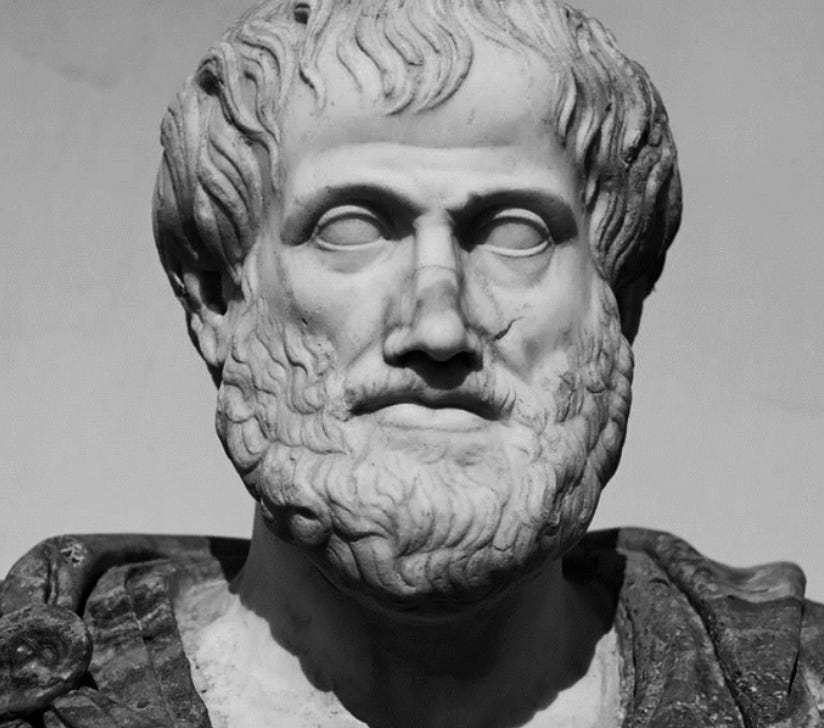
We found the answer in Aristotle’s Nicomachean Ethics.
To Aristotle, a good life (Eudaimonia) is achieved through good character. And good character is a result of action in accordance with the virtues.
“Virtue, then, is a state of character concerned with choice, lying in a mean… a mean between two vices, one of excess and one of deficiency.”
– Nicomachean Ethics, Book II, Chapter VI
We both agree that we want our children to live good lives. And that the key to this lies in developing their character in accordance with the virtues.
So we both agree with Aristotle that every virtue becomes a vice when taken to the extremes of deficiency or excess.
We understand, then, that a child’s character must be developed, and that our own behaviour in doing so must be balanced between the vices.
Too strict? Or too soft?
We must avoid both. We must find the balance. We must find the golden mean.
There are no rules about where exactly the golden mean lies. Each situation is different. What is courage in one scenario can be recklessness in another. It requires judgement (phronesis).
But understanding Aristotle’s virtues and the golden mean gives us the framework that guides us as parents as we search for the balance in every scenario.
Reasons to use Aristotle’s Golden Mean as a parent:
It gives you a behavioural guidance framework
It stops you parenting reactively
It protects you and your child from accidental extremes
It builds character systematically
It simplifies complexity
It reduces internal conflict
It builds self-awareness
It reduces regret
It creates calm strength
It aligns with human nature
It helps you model what good character looks like
It has stood the test of time
It creates consistency
It improves relationships
It leads to flourishing (eudaimonia)
It leads to alignment between both parents
It brings a sense of calm, stability, and reason to the home
It makes you better parents
Let us send you a free virtue framework poster.
Sign up for Letters For Little Heroes before our next letter and we’ll send you a free virtue framework poster of Aristotle’s 12 core virtues and the golden mean for each.
Visit lettersforlittleheroes.com
About Letters For Little Heroes
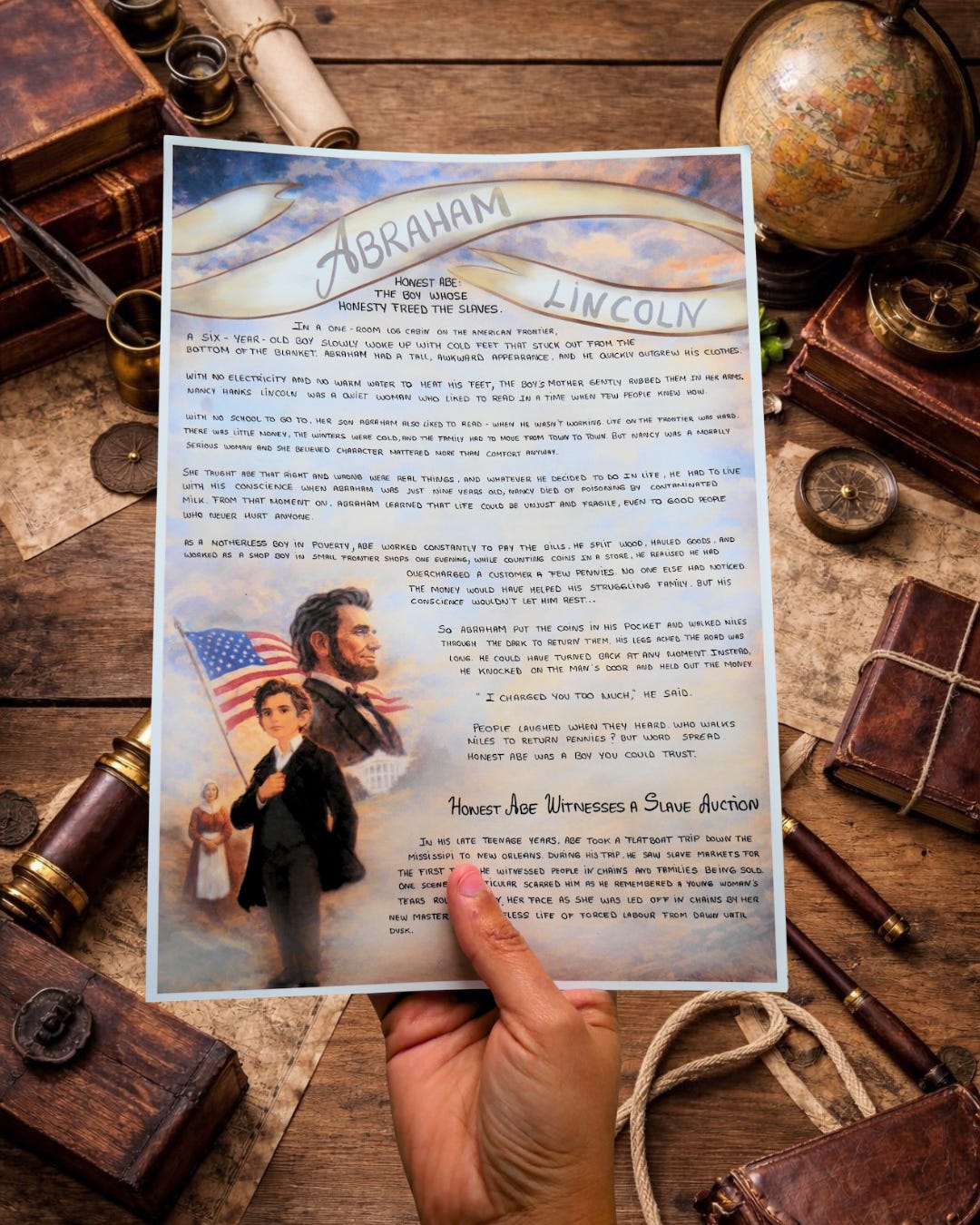
Created by a mother and a father, a former teacher with a master’s degree in neuropsychology for childhood education, and a writer, Letters for Little Heroes helps parents raise children of good character through the timeless power of story.
Each month, families receive a beautifully illustrated letter telling the true story of a historical hero — and the virtue they embodied — so children can practise it at home.
Visit our website for more information. There you’ll find a free download of one of our past hero letters to try.